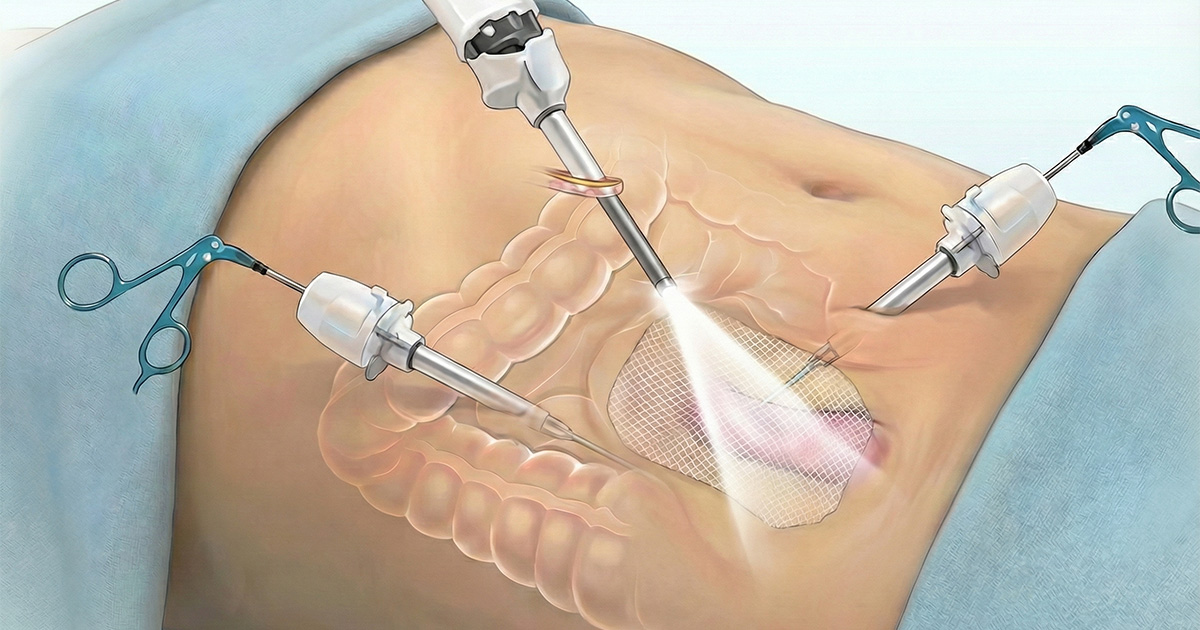
A hernia occurs when an internal organ or tissue pushes through a weak area in the surrounding muscle or connective tissue. Hernias commonly occur in the groin, abdominal wall, or around previous surgical sites.While some small hernias may initially cause few symptoms, a hernia does not usually disappear on its own.
Common symptoms include:
●
A visible or palpable lump
●
Swelling that becomes more noticeable while
coughing or standing
●
Groin or abdominal discomfort
●
Pain while lifting or exercising
●
A feeling of heaviness or pressure
Surgery may be recommended when a hernia causes pain,
increases in size, interferes with daily activities, or has a risk of
complications.
A hernia that becomes suddenly painful, firm, discoloured,
or cannot be pushed back inside may indicate incarceration or strangulation and
requires urgent medical attention.
Laparoscopic hernia repair is performed through small
abdominal incisions using a camera and specialised instruments. The weakened
area is repaired, usually with surgical mesh when appropriate.
The exact technique depends on the type and location of the
hernia.
For suitable patients, laparoscopic surgery may offer:
●
Smaller incisions
●
Less postoperative discomfort
●
Earlier mobilisation
●
Shorter recovery time
●
Ability to examine and repair certain hernias on
both sides during the same procedure
However, laparoscopic surgery is not appropriate for every
patient. Previous operations, the type of hernia, its size, and overall health
may influence the surgical approach.
Patients are generally encouraged to move around early after
surgery, while heavy lifting and strenuous activity should be avoided until the
surgeon advises that it is safe.
A proper surgical evaluation helps determine whether
laparoscopic hernia repair is the right option.